Sacred Objects Protocol
Legal & Organizations
Sacred Objects Protocol
Legal & OrganizationsGuidelines established to handle and care for sacred or culturally sensitive objects in collections with the appropriate respect. Such a protocol might detail who is allowed to view or touch an object, ceremonies or rituals that should accompany its display or movement, terminology to use in cataloging, and steps for consultation with the source community. The goal is to honor the spiritual significance of the object rather than treating it as a mere artifact.
Source: UNESCO, Hague Convention, UNIDROIT, ICOM
Sacred Site
Ethics & Community
Sacred Site
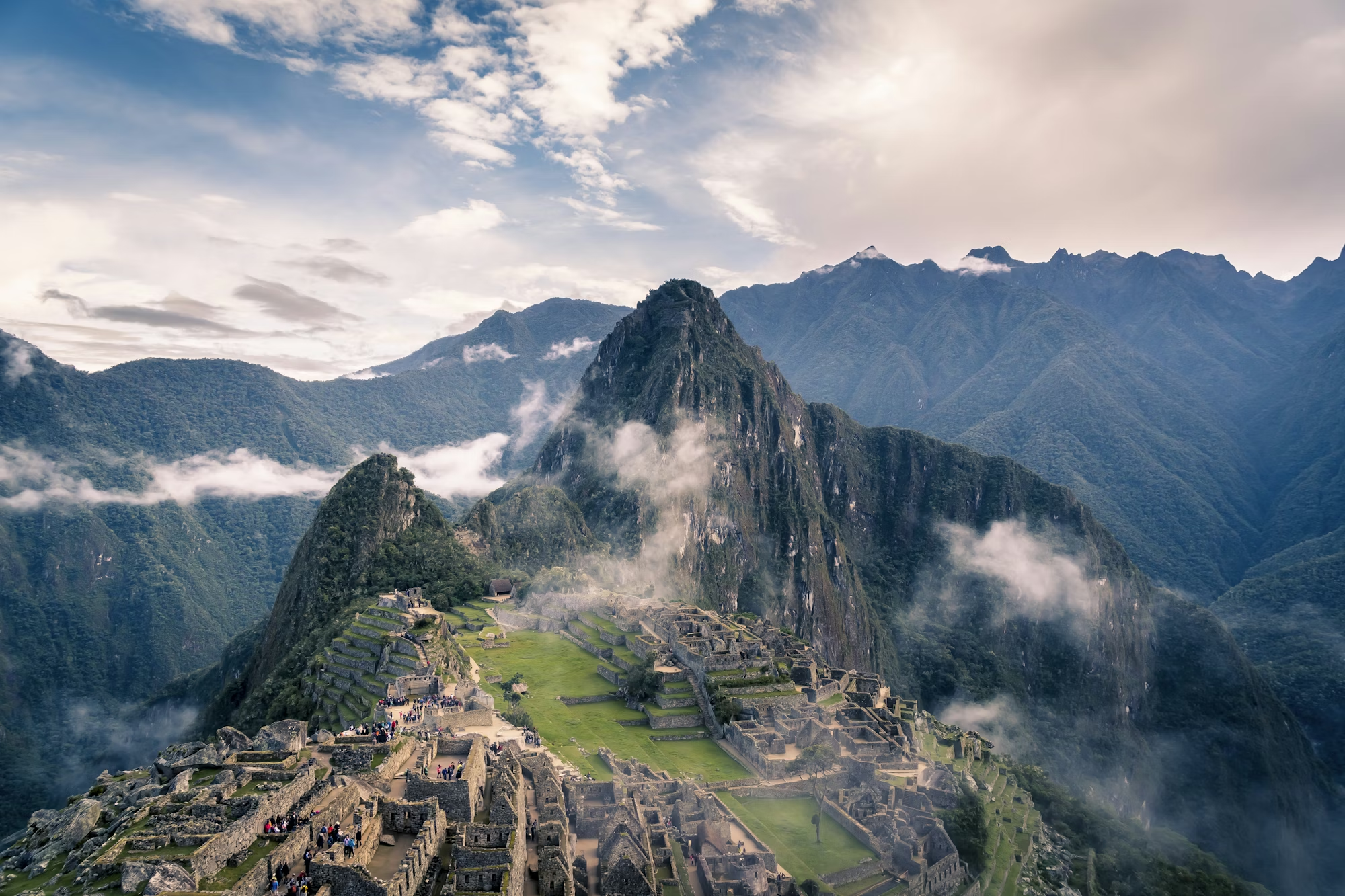
Ethics & CommunityA place revered for spiritual or religious reasons, regarded as holy or imbued with special meaning by a particular community. Sacred sites – such as temples, churches, shrines, burial grounds, or natural features like mountains and groves – are often key parts of cultural heritage and require respectful management.
Source: ICCROM, UNESCO
Safeguarding Intangible Cultural Heritage
Ethics & Community
Safeguarding Intangible Cultural Heritage
Ethics & CommunityMeasures and strategies aimed at ensuring that living cultural traditions (such as songs, crafts, and ceremonies) continue to thrive. This can include documentation, education, legal protection, or community support to help practitioners transmit their knowledge to future generations.
Source: ICCROM, UNESCO
Safeguarding People
Ethics & Community
Safeguarding People
Ethics & CommunitySafeguarding People describes ethical principles or engagement practices that protect people, respect communities, and improve collaboration in heritage work. It emphasizes consent, accountability, and culturally appropriate decision-making.
Source: ICCROM, UNESCO
Safeguarding Vulnerable Groups
Ethics & Community
Safeguarding Vulnerable Groups
Ethics & CommunitySafeguarding Vulnerable Groups describes ethical principles or engagement practices that protect people, respect communities, and improve collaboration in heritage work. It emphasizes consent, accountability, and culturally appropriate decision-making.
Source: ICCROM, UNESCO
Safety Perimeter
Disaster Management
Safety Perimeter
Disaster ManagementSafety Perimeter is a concept or practice used to reduce harm from hazards and manage emergencies affecting people, assets, and heritage. It supports preparedness, response, and recovery decisions with clear roles and prioritized actions.
Source: UNDRR, UNESCO
Salt Efflorescence
Conservation & Restoration
Salt Efflorescence
Conservation & RestorationSalt Efflorescence is a conservation approach or technique used to stabilize, preserve, or restore heritage materials and structures. It aims to protect significance while minimizing unnecessary change and documenting all interventions.
Source: ICCROM, ICOMOS
Salvage Prioritization
Disaster Management
Salvage Prioritization
Disaster ManagementThe process of deciding which objects or parts of a heritage site to rescue or stabilize first after a disaster. Because time and resources are limited in emergencies, heritage responders rank items by significance and vulnerability – for example, prioritizing irreplaceable artifacts or structurally critical elements for immediate salvage.
Source: UNDRR, UNESCO
Sanctions Compliance
Legal & Organizations
Sanctions Compliance
Legal & OrganizationsSanctions Compliance relates to the legal, institutional, or policy frameworks that govern heritage protection and emergency action. It clarifies responsibilities, permissible actions, and cooperation across jurisdictions and organizations.
Source: UNESCO, Hague Convention, UNIDROIT, ICOM
Search and Rescue
Disaster Management
Search and Rescue
Disaster ManagementSearch and Rescue is a concept or practice used to reduce harm from hazards and manage emergencies affecting people, assets, and heritage. It supports preparedness, response, and recovery decisions with clear roles and prioritized actions.
Source: UNDRR, UNESCO
Second Protocol (1999)
Legal & Organizations
Second Protocol (1999)
Legal & OrganizationsSecond Protocol (1999) relates to the legal, institutional, or policy frameworks that govern heritage protection and emergency action. It clarifies responsibilities, permissible actions, and cooperation across jurisdictions and organizations.
Source: UNESCO, Hague Convention, UNIDROIT, ICOM
Seismic Code
Legal & Organizations
Seismic Code
Legal & OrganizationsSeismic Code relates to the legal, institutional, or policy frameworks that govern heritage protection and emergency action. It clarifies responsibilities, permissible actions, and cooperation across jurisdictions and organizations.
Source: UNESCO, Hague Convention, UNIDROIT, ICOM
Seismic Retrofitting
Conservation & Restoration
Seismic Retrofitting
Conservation & RestorationUpgrades made to historic buildings or monuments to improve their structural performance during earthquakes. Techniques for seismic retrofitting include installing reinforcement (like steel rods, braces, or base isolators), strengthening connections between walls and floors, or using newer materials like fiber wraps on masonry. The challenge is to enhance safety and stability while also respecting the building’s historical fabric and appearance.
Source: ICCROM, ICOMOS
Shared Authority
Ethics & Community
Shared Authority
Ethics & CommunityShared Authority describes ethical principles or engagement practices that protect people, respect communities, and improve collaboration in heritage work. It emphasizes consent, accountability, and culturally appropriate decision-making.
Source: ICCROM, UNESCO
Shared Authority
Ethics & Community
Shared Authority
Ethics & CommunityA collaborative approach to heritage interpretation and management in which professionals (like museum curators or site managers) actively share decision-making power with community members or descendant groups. Instead of experts unilaterally determining how to present history or care for collections, shared authority invites those who inherit or are represented by the heritage to co-create narratives and policies, leading to more inclusive and accepted outcomes.
Source: ICCROM, UNESCO
Sheltering
Disaster Management
Sheltering
Disaster ManagementSheltering is a concept or practice used to reduce harm from hazards and manage emergencies affecting people, assets, and heritage. It supports preparedness, response, and recovery decisions with clear roles and prioritized actions.
Source: UNDRR, UNESCO
Site Buffer Zone
Cultural Heritage
Site Buffer Zone
Cultural HeritageSite Buffer Zone refers to cultural expressions, places, or objects valued for their historical, artistic, social, or spiritual meaning. It helps communities maintain identity and continuity while guiding protection and responsible use.
Source: UNESCO, ICOMOS
Site Safety Briefing
Disaster Management
Site Safety Briefing
Disaster ManagementSite Safety Briefing is a concept or practice used to reduce harm from hazards and manage emergencies affecting people, assets, and heritage. It supports preparedness, response, and recovery decisions with clear roles and prioritized actions.
Source: UNDRR, UNESCO
Site of Memory
Cultural Heritage
Site of Memory
Cultural HeritageA place – which can be a location, landmark, or landscape – that holds significant historical memory for a group of people. Sites of memory are often associated with notable or traumatic events (such as battlefields, memorials, or former institutions) and serve as focal points for remembrance and education.
Source: UNESCO, ICOMOS
Situation Report
Disaster Management
Situation Report
Disaster ManagementSituation Report is a concept or practice used to reduce harm from hazards and manage emergencies affecting people, assets, and heritage. It supports preparedness, response, and recovery decisions with clear roles and prioritized actions.
Source: UNDRR, UNESCO
Social License to Operate
Ethics & Community
Social License to Operate
Ethics & CommunitySocial License to Operate describes ethical principles or engagement practices that protect people, respect communities, and improve collaboration in heritage work. It emphasizes consent, accountability, and culturally appropriate decision-making.
Source: ICCROM, UNESCO
Social License to Operate
Legal & Organizations
Social License to Operate
Legal & OrganizationsThe level of acceptance or approval by local communities and stakeholders for a heritage project or institution. It’s an informal, intangible permission – a museum or excavation might have legal permits, but the social license depends on whether the community feels the activity is respectful, beneficial, and aligned with their values. Earning and maintaining a social license involves trust-building, dialogue, and demonstrating social value.
Source: UNESCO, Hague Convention, UNIDROIT, ICOM
Spirit of Place
Cultural Heritage
Spirit of Place
Cultural HeritageThe unique atmosphere, character, or feeling that a location evokes, shaped by its history, environment, and cultural associations. Also known by the French term genius loci, it refers to the intangible essence that makes a heritage place special or meaningful to people.
Source: UNESCO, ICOMOS
Stakeholder
Ethics & Community
Stakeholder
Ethics & CommunityStakeholder describes ethical principles or engagement practices that protect people, respect communities, and improve collaboration in heritage work. It emphasizes consent, accountability, and culturally appropriate decision-making.
Source: ICCROM, UNESCO
Stakeholder Engagement
Ethics & Community
Stakeholder Engagement
Ethics & CommunityStakeholder Engagement describes ethical principles or engagement practices that protect people, respect communities, and improve collaboration in heritage work. It emphasizes consent, accountability, and culturally appropriate decision-making.
Source: ICCROM, UNESCO
Stakeholder Engagement
Ethics & Community
Stakeholder Engagement
Ethics & CommunityThe practice of involving all parties who have an interest or stake in a cultural heritage project throughout its planning and implementation. Stakeholders can include local residents, indigenous groups, government agencies, funders, NGOs, and researchers. Effective engagement means communicating transparently, seeking input, and collaborating on decisions so that the project respects the needs and values of those affected.
Source: ICCROM, UNESCO
Statement of Significance
Cultural Heritage
Statement of Significance
Cultural HeritageStatement of Significance refers to cultural expressions, places, or objects valued for their historical, artistic, social, or spiritual meaning. It helps communities maintain identity and continuity while guiding protection and responsible use.
Source: UNESCO, ICOMOS
Storage Supports
Conservation & Restoration
Storage Supports
Conservation & RestorationStorage Supports is a conservation approach or technique used to stabilize, preserve, or restore heritage materials and structures. It aims to protect significance while minimizing unnecessary change and documenting all interventions.
Source: ICCROM, ICOMOS
Structural Assessment
Conservation & Restoration
Structural Assessment
Conservation & RestorationStructural Assessment is a conservation approach or technique used to stabilize, preserve, or restore heritage materials and structures. It aims to protect significance while minimizing unnecessary change and documenting all interventions.
Source: ICCROM, ICOMOS
Structural Shoring
Disaster Management
Structural Shoring
Disaster ManagementStructural Shoring is a concept or practice used to reduce harm from hazards and manage emergencies affecting people, assets, and heritage. It supports preparedness, response, and recovery decisions with clear roles and prioritized actions.
Source: UNDRR, UNESCO
Surface Cleaning
Conservation & Restoration
Surface Cleaning
Conservation & RestorationThe gentle removal of dirt, soot, corrosion, or biological growth from the surface of heritage objects or materials. This may involve dry methods (like brushes, vacuuming) or wet methods (using water, solvents, or special cleaning solutions) depending on the item’s sensitivity. Surface cleaning improves appearance and can slow deterioration (for example, removing pollutants that might acidicly corrode stone or metal).
Source: ICCROM, ICOMOS